
The Unexpected Way I Discovered Digital Marketing
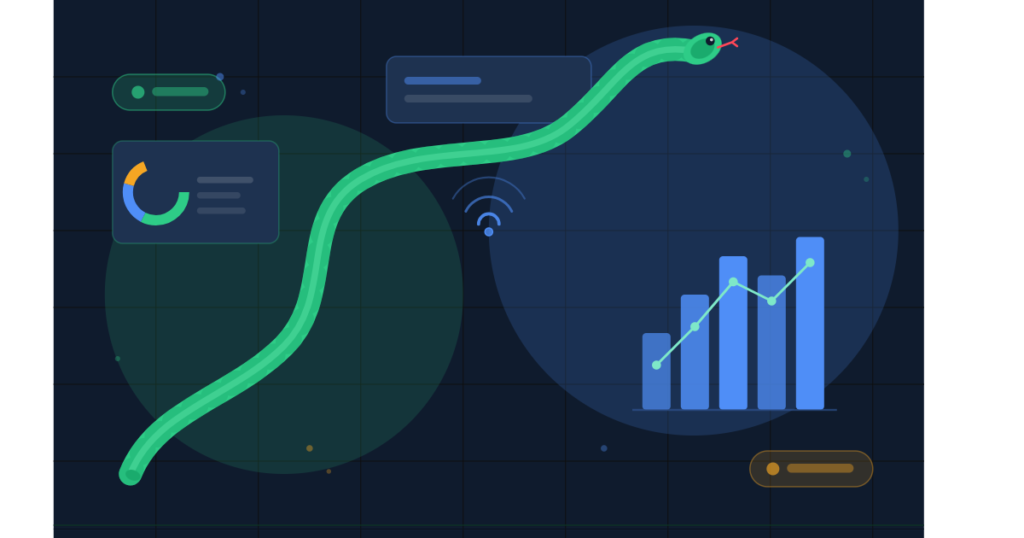
I was not sitting in a classroom when I first understood marketing. I was catching snakes.
While catching snakes I used to come across a lot of different kinds of people. And while the conversations were often about snakes and wildlife, my real focus was always on something else — observing people. I loved reading people. Their behaviour, their expressions, the way they talked, the way they reacted. Over time, I had mentally built a whole system in my head — people segmented by their behaviour, their tone, their body language.
I had no idea back then that this habit of observation would one day become my biggest strength in digital marketing.
But before I tell you the full story, let me ask you something.
Are You Curious About Starting a Career in Digital Marketing?
You are absolutely right to be curious.
At some point in life, almost everyone thinks about marketing as a career — and that is completely normal. It is not just an Indian thing either; this happens all over the world.
The reason is simple: marketing has been in front of us every single day since we were children. It is an immortal field, and it is deeply connected to our psychology.
We hear marketing. We see marketing. And we apply it in our day-to-day lives without even realising it — like when we convince someone to do something they are not particularly interested in doing. That is marketing. You are doing it subconsciously, because you have been absorbing it your entire life.
The only difference is the channel and the method. When you do it in everyday life, it is called convincing. But at its core, marketing — and especially digital marketing — is also about convincing. Convincing people. Convincing the world.
That natural ability leads many of us to think: “If I can convince the people around me, I can convince people around the world.” And honestly, that is not wrong. But to do it at scale — to do it through digital marketing — you need a very strong understanding of human behaviour and psychology.
Why Psychology Is the Real Foundation of Digital Marketing
People are different everywhere. Their experiences, backgrounds, and environments are all unique. But there are certain things that are universal — traits and instincts that almost all human beings share, such as:
- The desire for approval from others
- The fear of losing money or missing out on opportunities
- The tendency to trust what other people are already doing
- Making decisions driven by emotion rather than pure logic
This is why we are not entirely wrong in believing we can connect with people — but we are also not a hundred percent right. A successful digital marketer understands these universal human tendencies and applies them through strategic, well-planned campaigns.
Digital marketing is not just about being creative. It is far more about understanding psychology and human behaviour.
What You Need Before You Start Your Digital Marketing Career
To build a strong foundation in digital marketing, you need:
1. Observation skills
— The ability to closely watch how people behave, what triggers their decisions, and how they respond to different content, ads, and messages.
2. Market understanding
— A clear picture of the landscape you are entering: who the players are, what is already working, and where the gaps are.
Once you have built these skills, you need to document your findings. Create a personal knowledge base — a record of your observations, patterns, and insights.
But knowledge alone is not enough. You need to know:
- What to do with that knowledge
- Where and when to use it
- And most importantly, how to use it effectively in your digital marketing campaigns
Once you have all of that, the next step is to define your niche. A niche can be divided in several ways — by the class of people you want to reach, by gender, by age group, or by interests and behaviours. Without clearly defined demographics and a psychographic profile of your target audience, all of your digital marketing efforts risk going to waste.
These are the very basics you need to begin your digital marketing journey. There is more to learn, but before we go further, let us understand which type of marketing is the most effective, practical, result-driven, and measurable.
Two Types of Marketing: Traditional vs. Digital Marketing
1. Traditional Marketing
There are three main channels of traditional marketing:
- Television advertising
- Radio advertising
- Banner (print/outdoor) advertising
Traditional marketing worked well in a world without the internet, when television and radio were the primary sources of entertainment and information. However, the major drawbacks were significant — it is not measurable, it is very costly, and you are completely dependent on third-party agencies to create and execute your campaigns, which is exhausting and draining for most businesses.
It was the best method available at the time. But not anymore — definitely not after the digital revolution. And that is exactly where digital marketing steps in.
2. Digital Marketing (Internet Marketing)
Today, the majority of people use the internet. We are more connected to our digital devices than ever before. For most people, the internet has become a daily necessity — and there are very few who can comfortably go without it.
That is precisely why digital marketing is the most effective and most powerful form of marketing today.
The major benefits of digital marketing include:
- It is measurable — you can track every click, impression, and conversion
- It can be personalised for every individual
- Ads are easy to create and replace
- Campaigns can be largely self-executing through automation
But if I had to highlight the two most important advantages of digital marketing, they would be:
- Measurability — you always know what is working and what is not
- Personalisation — you can speak directly to each individual in a way that feels personally relevant to them
These two things alone make digital marketing far superior to any traditional method.
The Channels of Digital Marketing
There are multiple ways to reach people through the internet. We call these digital marketing channels:
- Social Media Marketing
- Social Media Advertising
- Search Engine Optimization (SEO)
- Search Engine Marketing (SEM)
- Display Advertising
- Content Marketing
- Video Marketing
- Influencer Marketing
A Brief Overview of Each Digital Marketing Channel
1. Social Media Marketing (SMM)
-his is the process of using social media platforms to build a brand and connect with an audience without paid promotion. It involves posting content consistently, engaging with followers, and building a community around your brand.
2. Social Media Advertising
-This refers to running paid advertisements on platforms like Facebook and Instagram. It allows businesses to target specific audiences based on their interests, location, age, and behaviour to generate leads or sales.
3. Search Engine Optimization (SEO)
–SEO is the practice of improving a website so that it ranks higher in search engine results organically. It includes optimising content, using the right keywords, and improving website performance to attract free, long-term traffic — and it is one of the most valuable long-term digital marketing strategies.
4. Search Engine Marketing (SEM)
-SEM involves running paid ads on search engines to appear at the top of search results. It is mainly done through platforms like Google Ads and works on a pay-per-click model, where you only pay when someone clicks your ad.
5. Display Advertising
-Display advertising includes visual ads such as banners or images that appear on websites, apps, or platforms. These ads are often used for brand awareness and retargeting people who have already visited your website.
6. Content Marketing
-Content marketing is about creating useful and valuable content to attract and engage an audience. This includes blogs, articles, guides, and other formats that help build trust and establish authority — which is exactly what digital marketing relies on to generate organic growth.
7. Video Marketing
-Video marketing uses videos to promote products, services, or brand messages. It includes platforms like YouTube and short-form content such as Instagram Reels. Videos are highly engaging and extremely effective for digital marketing storytelling.
8. Influencer Marketing
-Influencer marketing involves collaborating with individuals who have a strong following on social media. These influencers promote your products or services to their audience, helping brands build trust and reach new people authentically.
How I Ended Up in Digital Marketing
the full story
Now let me take you back to where it all started.
When I was in college, I was the kind of student who never opened a textbook — but I was very good at practicals and anything that did not involve sitting in a classroom. And one of my biggest hobbies, as I told you at the beginning, was snake catching.
While catching snakes, I came across a lot of different kinds of people. Some conversations were about snakes and wildlife, but my real focus was always on observing the people in front of me. I used to take mental notes. I had segmented people in my head based on their behaviour, expressions, and talking style — without even knowing that I was building a foundational skill that would one day serve me in digital marketing.
Back then, I was very confused about my career. I tried multiple things. I worked at my father’s interior design company and even got a certification in interior design. I worked as an independent designer for a while after that. But I did not enjoy it. It did not feel right.
I kept coming back to one thought: I need to do something that uses my ability to observe and understand people. That is when I decided to give marketing — and specifically, digital marketing — a serious shot. I did my research, compared traditional marketing and digital marketing side by side, and the choice was obvious. Digital marketing won.
But I still did not know how to actually break into the field.
Why I Started with Sales Before Digital Marketing
and you should know about sales too.
One thing I knew for certain: if I wanted to be truly great at digital marketing, I needed to first understand what happens after marketing — and that is sales.
Because when you know how to sell, you understand how to showcase a product. You see how a customer thinks. You learn what tone to use, how to read a room, and how a person reacts when they see or hear something specific. And these exact insights are what make a digital marketing campaign powerful.
While selling, you are simultaneously doing multiple things: marketing, selling, observing, judging, segmenting, and understanding people — all at once.
And most importantly, you come to truly appreciate the value of digital marketing. When the digital marketing team does their job well, the sales team barely has to explain anything. The customer already understands the product and already wants it. But when digital marketing is weak, the entire load falls on sales — and eventually, sales suffer too.
So I got a job at a Lenskart store as a Sales Executive. Before going on the floor, I went through a month of intensive sales training where I learned the best sales techniques. I worked there for three months and gained exactly the experience I needed.
Learning Digital Marketing Formally
After sales, it was time to dive into digital marketing properly.
I started researching the best digital marketing courses available. That is when I came across Young Urban Project, which was offering a 12-week advanced digital marketing course. I asked around about their teaching methods and the experiences of past students, and the feedback was overwhelmingly positive. So I enrolled.
Over those 12 weeks, I learned digital marketing fundamentals, all major digital marketing channels, marketing automation, and — very importantly — the tools required to execute real campaigns. This included everything from WordPress and Elementor, to SEO tools like Semrush, email marketing tools like Brevo, and design tools like Canva.
However, not every tool was covered in the course. For those, I took matters into my own hands — I watched YouTube videos, studied tutorials created by the tools themselves, and read detailed articles until I had a solid grip on each one.
Building My Own Website
After completing the digital marketing course, I built my own website — siddhantmahaja.com.
I worked on it with real passion. At first, it was hard. I struggled a lot. But as I started understanding the tools, user behaviour, content placement, and what makes a page actually work — it gradually got easier. Now, creating and managing websites feels completely natural to me. I am genuinely proud of what I built.
After the website, I started practising each digital marketing channel one by one, repeatedly. Managing campaigns on Meta and Google, doing performance analysis, creating social media content — all of it became second nature through consistent practice.
The Most Important Lesson About Digital Marketing
But here is the one thing I really want you to understand:
The most important part of digital marketing is not execution — it is strategy.
Machines and tools can handle execution. What they cannot replace is your thinking, your understanding of people, and the experience you build over time. When you walk into a digital marketing job interview, the interviewer is not going to ask you to run an ad right away. They are going to ask about your fundamentals, your understanding of strategy, and your thought process behind a campaign.
So after getting the execution side down, I went deeper into the theoretical side — studying strategies, frameworks, and the reasoning behind effective digital marketing campaigns. I built a solid grip on both.
And that is how I prepared myself as a digital marketing fresher. Skills. Tools. Knowledge. Practice.
That is exactly where I stand today — and it is exactly where you can get to as well, if you take it one step at a time.
Ready to go deeper? Stay tuned for the next part of this series where we explore each digital marketing channel in detail.